Industry Knowledge
How the Integrated Flange Changes Clamping Force Distribution — and Why It Matters More Than Most Buyers Realize
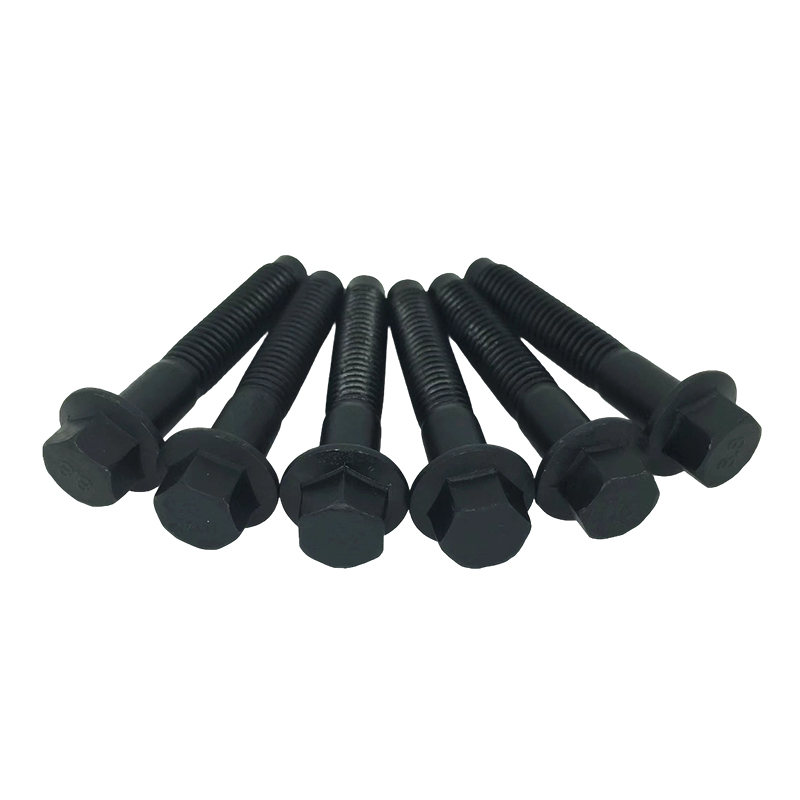
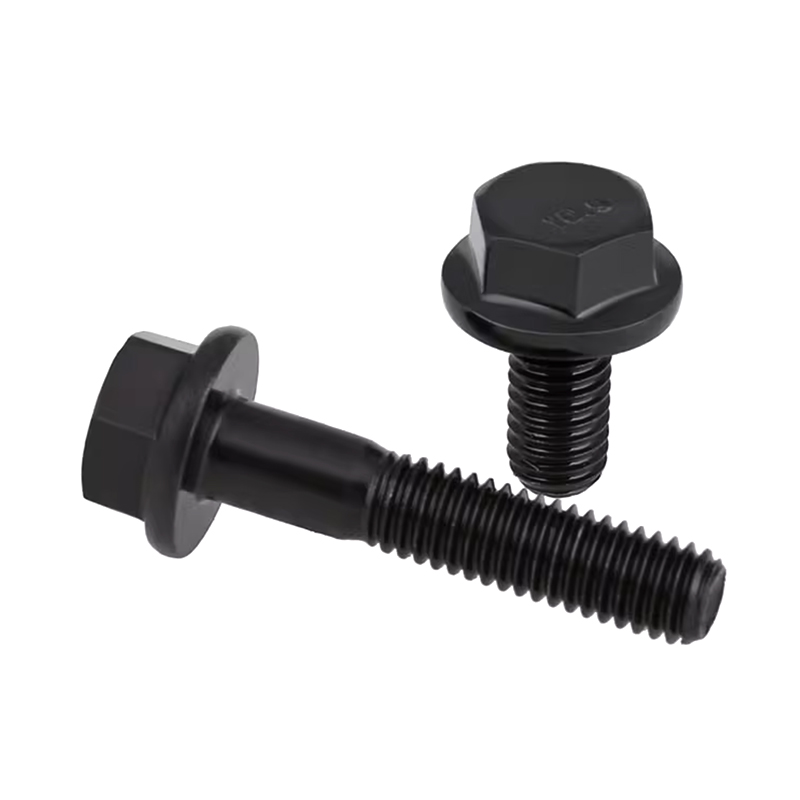
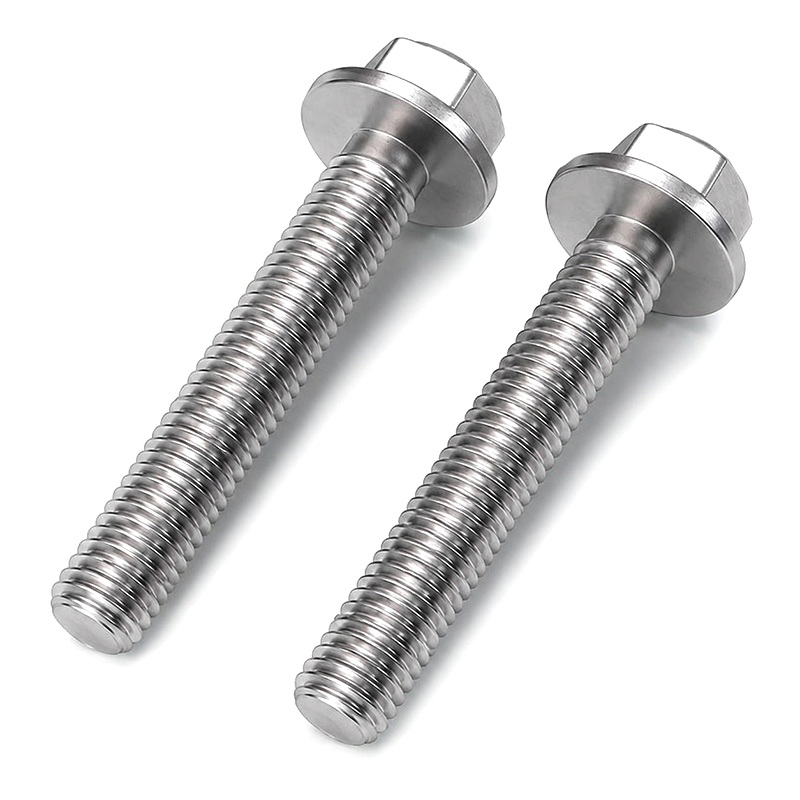
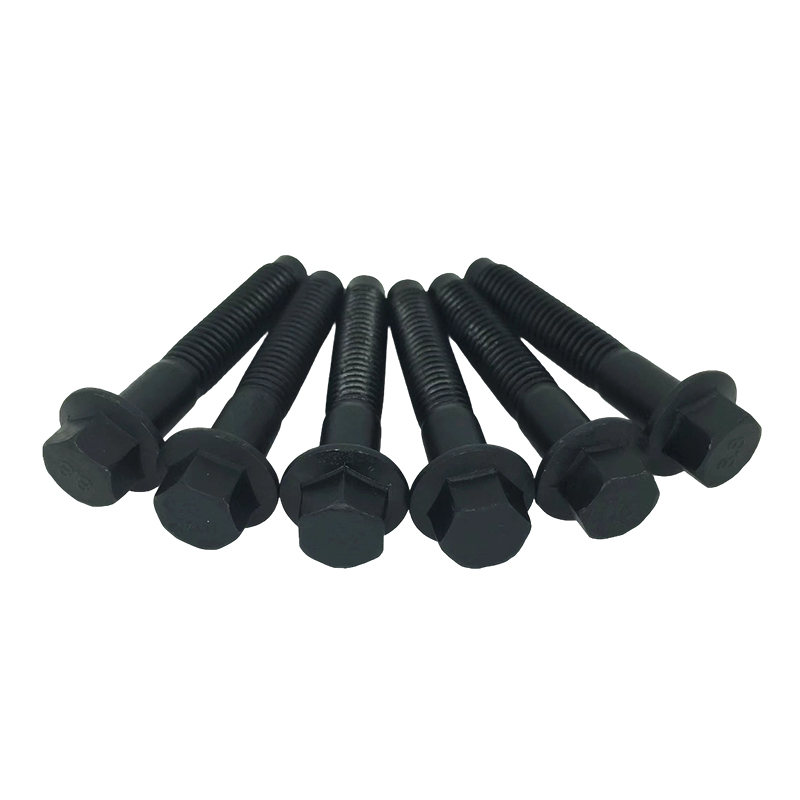
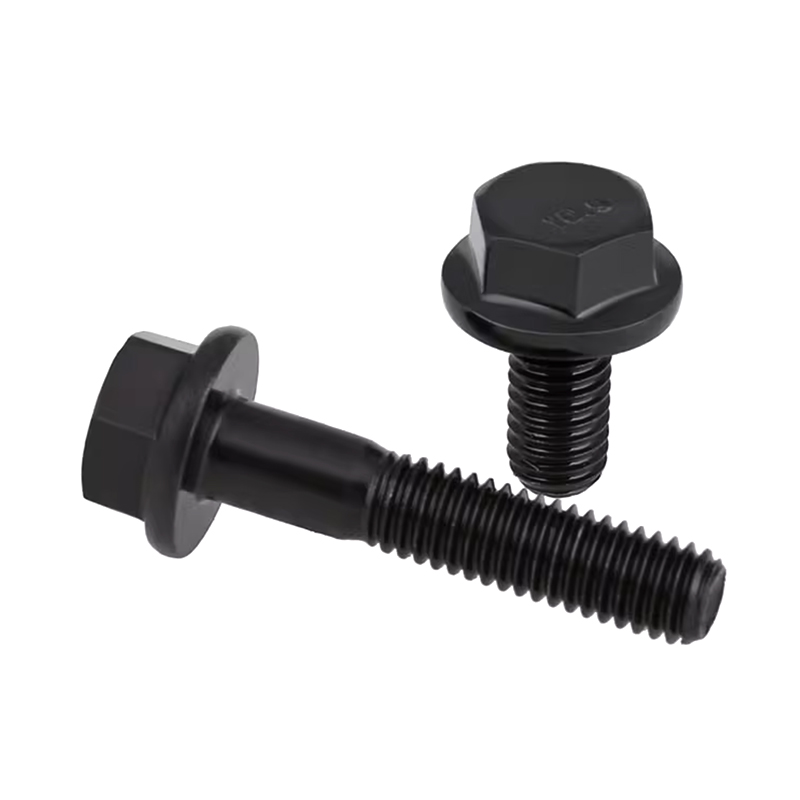
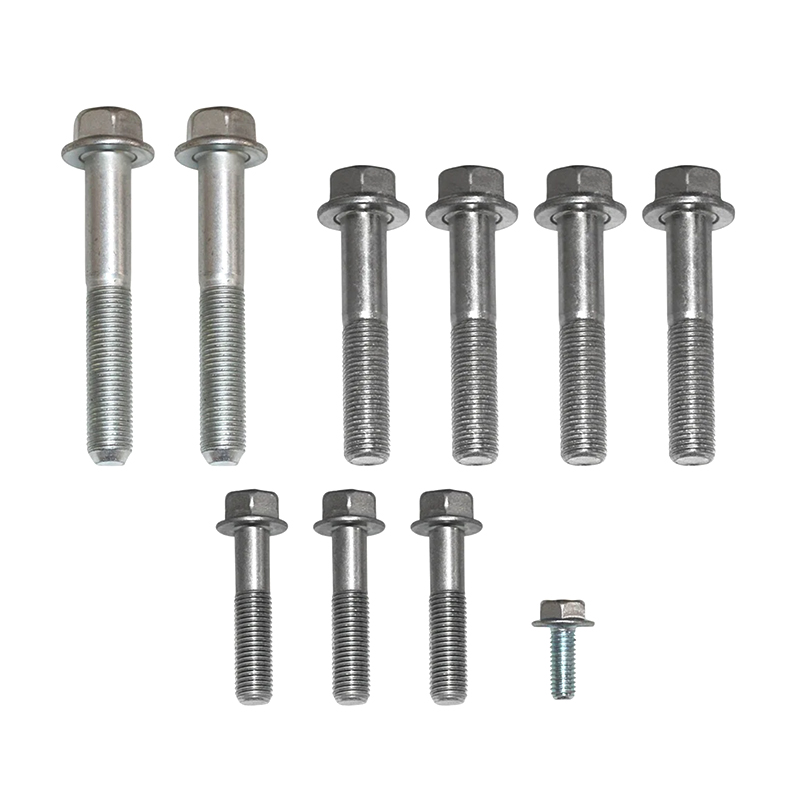
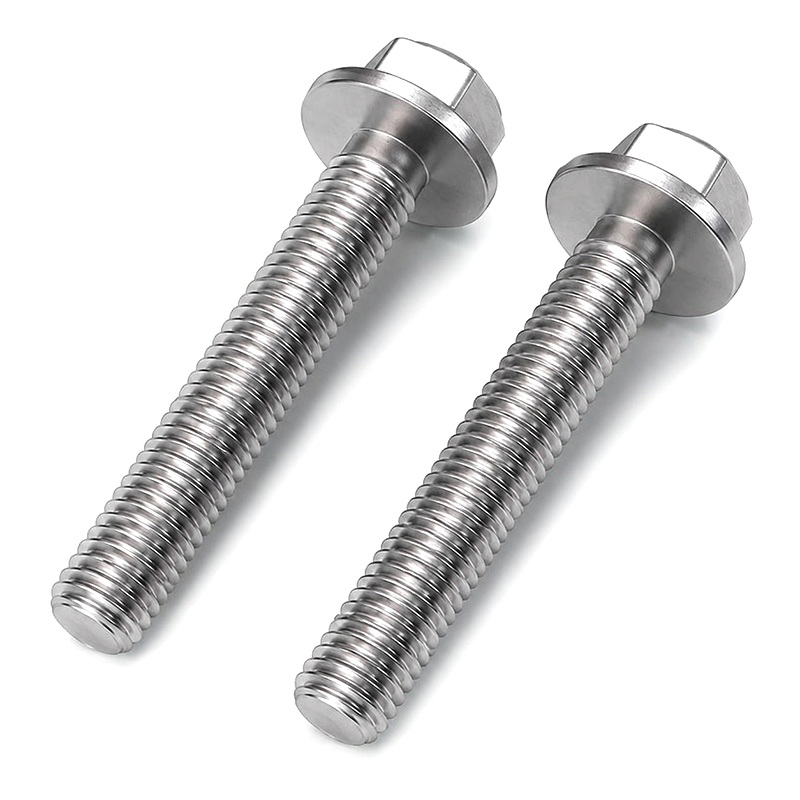
The mechanical difference between a standard hex bolt and a Hexagonal Flange Bolt is not cosmetic. When a hex bolt is tightened without a washer, clamping force is concentrated across the six contact edges of the head — a relatively small area. Even with a flat washer added, there is an additional friction interface between the bolt head and the washer face that introduces variability into torque-to-preload conversion. The integrated flange on a flange bolt eliminates that variable entirely. Because the flange is machined as one piece with the head, it does not rotate relative to the bolt during tightening, which means the torque applied translates more consistently and predictably into actual clamping force at the joint.
The bearing surface area of a flange bolt is substantially larger than its hex-head equivalent in the same diameter. On an M10 flange bolt, for instance, the flange diameter typically extends to approximately 21–24 mm depending on the standard, compared to the 17 mm wrench flat span of a standard M10 hex head. This wider footprint reduces localized bearing stress on the mating material — a meaningful advantage when fastening into aluminum housings, composite panels, or thin sheet metal where a narrow contact area would cause surface yielding or damage over time. In automated assembly environments where torque consistency directly affects production quality, this repeatability advantage becomes a measurable process control benefit rather than just a design preference.
Serrated vs. Non-Serrated Flange: Selecting the Right Anti-Loosening Configuration
Hexagonal Flange Bolts are manufactured in two distinct flange configurations, and the selection between them has concrete consequences for joint reliability under vibration. The smooth (non-serrated) flange distributes load over a wider area and protects the mating surface from marking, making it the standard choice for most industrial assemblies, painted surfaces, and applications where disassembly and re-use are anticipated. The serrated (toothed) flange variant adds radial micro-teeth on the underside of the flange that bite into the joint surface during tightening, creating a mechanical locking action that resists rotational loosening without any additional hardware.
The practical value of serrated flanges is most evident in continuously vibrating machinery — engine mounts, compressor brackets, conveyor frames, automotive subframes — where conventional spring washers tend to flatten and lose their locking effect over time. A serrated flange bolt maintains its grip through the mechanical interlock of the teeth rather than relying on washer spring-back, which degrades under cyclic loading. The trade-off is surface damage: serrated flanges are not appropriate on soft materials like aluminum alloy housings, plastic components, or coated surfaces where the teeth would embed too deeply and compromise surface integrity.
| Flange Type |
Anti-Loosening Mechanism |
Best Suited For |
Avoid On |
| Smooth (Non-Serrated) |
Friction from wide bearing area |
General assemblies, painted surfaces, re-usable joints |
High-vibration without additional locking |
| Serrated (Toothed) |
Mechanical tooth interlock into mating surface |
Engine mounts, compressors, vibrating machinery |
Aluminum, plastics, coated or painted surfaces |
One critical installation note: adding a separate flat washer under a serrated flange bolt defeats the locking mechanism entirely. The washer prevents the teeth from contacting the joint surface, removing the mechanical interlock while also introducing the variable friction interface that the flange design was meant to eliminate. This is one of the more common field installation errors seen in high-volume assembly operations.
Surface Treatment Selection for Hexagonal Flange Bolts Across Different Operating Environments
The surface treatment applied to a Hexagonal Flange Bolt affects not only corrosion resistance but also torque-to-preload behavior, dimensional tolerance on the threads, and compatibility with the mating material. Selecting the wrong coating for the environment — or applying an incorrect coating thickness — can cause joint failures that have nothing to do with the bolt's base material strength.
Zinc Electroplating (Blue-White or Yellow Passivated)
The most common commercial surface treatment for standard carbon steel flange bolts under DIN 6921. Blue-white zinc provides moderate corrosion protection (typically 72–120 hours salt spray resistance) and is cost-effective for indoor or sheltered assemblies. Yellow passivated zinc extends this slightly and adds a distinctive gold tint often used for visual identification. Both coatings add 5–8 µm per side to thread dimensions, so thread tolerances for plated bolts shift from 6g (plain) to 6h to accommodate the coating build-up — a dimensional factor that matters when selecting matching nuts.
Zinc-Nickel Alloy Plating
Preferred in the automotive industry for underbody and under-hood components where combined exposure to road salt, moisture, and elevated temperatures is routine. Zinc-nickel alloy coatings typically achieve 500–1,000 hours of salt spray resistance and maintain performance up to approximately 200°C — significantly beyond the useful range of standard zinc plating. This coating is a common specification in automotive OEM supply chains for engine bracket bolts, exhaust system fasteners, and suspension components.
Dacromet / Geomet (Zinc-Flake Coatings)
Zinc-flake coatings applied without electroplating, eliminating any risk of hydrogen embrittlement — a critical advantage for high-strength bolts at grade 10.9 and above. Dacromet provides 500+ hours salt spray resistance with an extremely thin coating layer (typically 8–10 µm total), which makes it suitable for tight-tolerance threaded applications where electrolytic coatings would compromise fit. It is widely specified for flange bolts used in wind turbine tower structures, infrastructure hardware, and automotive chassis applications where both corrosion resistance and dimensional precision are non-negotiable.
Hot-Dip Galvanizing
Reserved for outdoor structural and civil engineering applications where maximum zinc thickness (45–85 µm) is required for long-term atmospheric corrosion protection. The heavy coating build-up requires matching nuts to be tapped oversize to accommodate the added material on bolt threads. Hot-dip galvanized flange bolts are less common in precision industrial assemblies due to coating roughness and thickness variation, but remain the standard specification for highway infrastructure, transmission towers, and outdoor steel structures.
Why Automotive-Grade Manufacturing Discipline Matters When Sourcing Hexagonal Flange Bolts for Industrial Applications
Hexagonal Flange Bolts are among the most common fasteners used across automotive, machinery, and industrial assembly — and that ubiquity creates a widespread misconception that all suppliers producing to the same nominal standard (DIN 6921, for example) deliver equivalent products. In practice, the critical differentiators are manufacturing process control, heat treatment consistency, dimensional tolerance management, and the robustness of the inspection system in place — not simply whether the bolt carries the right grade marking on its head.
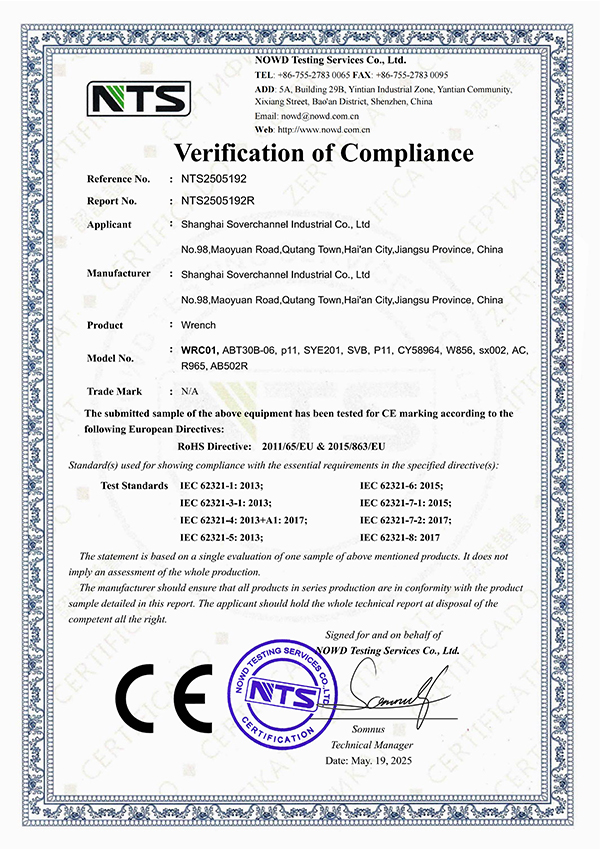
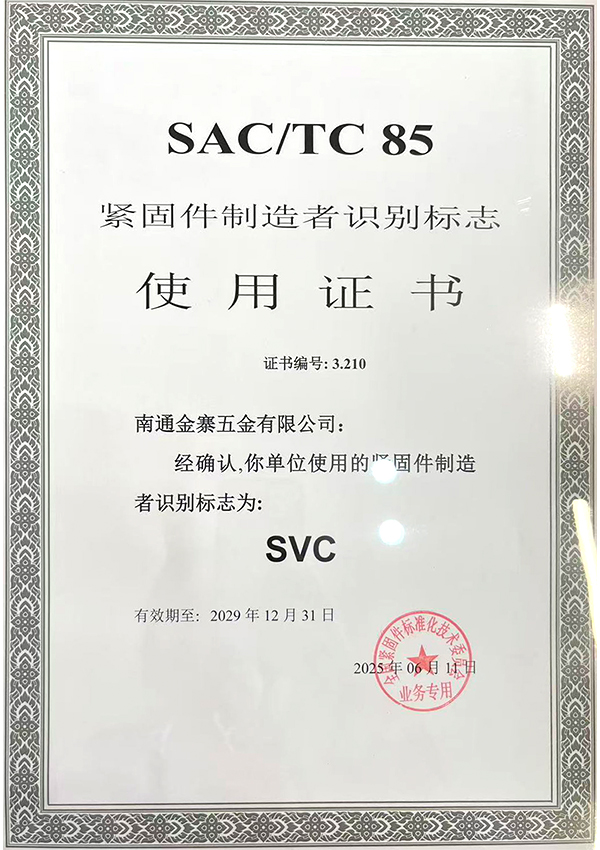
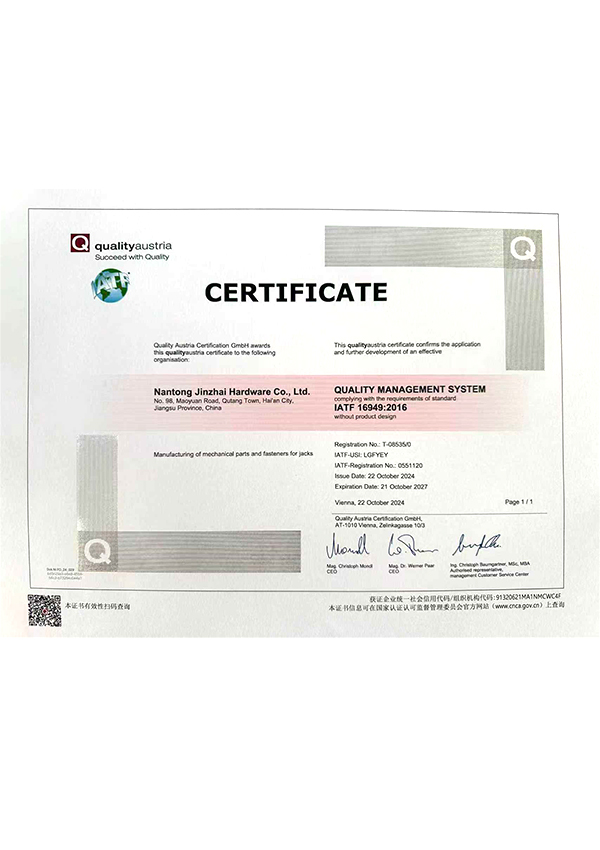
Shanghai Soverchannel Industrial Co., Ltd. is an OEM/ODM Hexagonal Flange Bolt manufacturer whose production base, Nantong Jinzhai Hardware Co., Ltd., was built on years of deep engagement in the automotive fastener supply chain. Automotive OEM requirements are structurally more demanding than most industrial specifications: every lot must carry full material traceability, mechanical property test reports, dimensional inspection records, and surface treatment certification. Deviation tolerances are tighter. Sampling plans follow statistical process control methodology rather than simple pass/fail sampling. Heat treatment validation — including hardness testing and metallographic inspection of tempered microstructure — is standard practice, not an optional add-on.
This full-process quality infrastructure translates directly into reliability advantages for industrial customers purchasing flange bolts for machinery, construction equipment, and heavy manufacturing applications. When a bolt is produced under automotive-grade quality control, the clamping force it delivers after installation closely matches the torque table specification — not because the bolt happened to be correct, but because the entire production chain was designed to make deviations detectable before shipment. Shanghai Soverchannel Industrial Co., Ltd. applies this same standard across both its catalog flange bolt range and its custom non-standard fastener production, providing customers with a level of traceability and process consistency typically associated with automotive Tier 1 supply rather than general industrial hardware.
Torque Specification Considerations Specific to Flange Bolt Joints
Torque tables published for standard metric bolts cannot be applied directly to Hexagonal Flange Bolts without adjustment. The friction conditions under a flange head differ from those under a hex head with a separate washer, and these differences affect the torque-to-preload conversion factor (K factor) used to calculate installation torque. Using an incorrect torque value results in either under-clamped joints — susceptible to loosening — or over-tightened bolts that exceed proof load and risk yield failure or fatigue cracking.
The following factors are specific to flange bolt torque calculation and must be accounted for in the joint design:
- Bearing surface friction coefficient: The smooth flange has a defined friction coefficient that differs from a hardened flat washer. Surface treatment affects this value — a Dacromet-coated flange bolt has a lower friction coefficient than a plain-finish or zinc-plated equivalent, meaning the same torque produces higher preload. Manufacturer torque specifications should always state the surface condition assumed.
- Serration engagement force: Serrated flange bolts require additional torque to embed the teeth during initial tightening, above what a smooth flange of the same size demands. This initial embedding torque must be distinguished from the final clamping torque when verifying joint preload.
- Lubrication interaction with serrations: Lubricating a serrated flange bolt reduces thread friction (potentially good for preload) but also reduces the serration bite into the mating surface, partially defeating the locking function. In vibration-critical joints using serrated flange bolts, dry installation is generally preferred over lubricated installation.
- Re-use limits: Serrated flange bolts should not be reused without re-inspection of both the bolt and the mating surface. The surface indentations from the first installation alter the friction and locking behavior on subsequent assemblies, making torque-to-preload prediction less reliable.
For OEM applications, torque values for Hexagonal Flange Bolts are typically derived from pre-installation testing using representative fastener and joint configurations — not from generic torque charts. This is standard practice in the automotive supply chain and applies equally in precision industrial machinery assembly. When in doubt, request torque specification guidance from the fastener manufacturer based on the actual bolt grade, coating, and mating material combination in use.
Custom and Non-Standard Hexagonal Flange Bolt Manufacturing: When Catalog Dimensions Are Not Enough
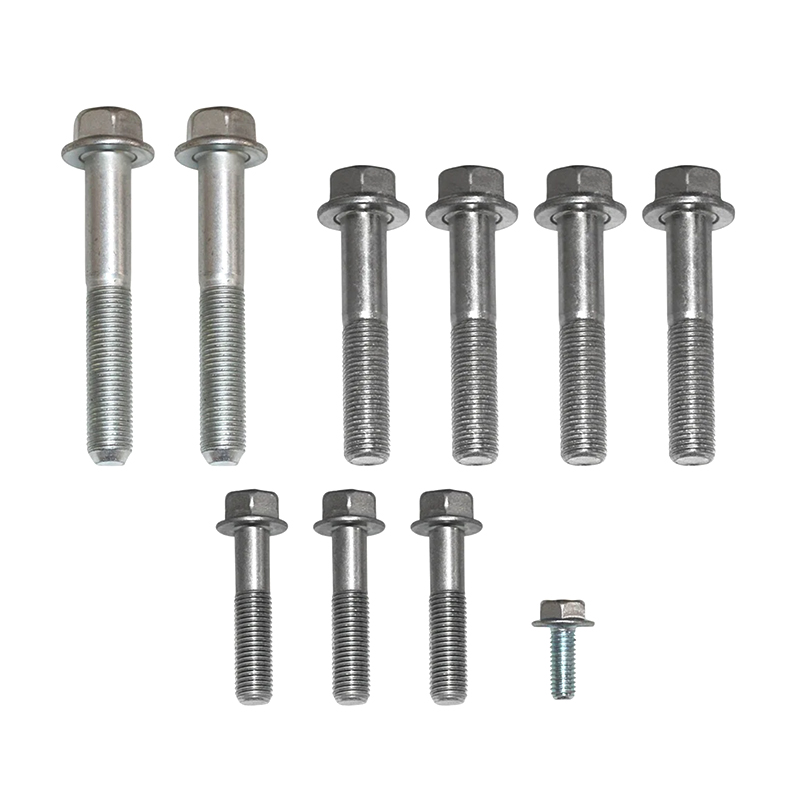
Standard catalog Hexagonal Flange Bolts cover the most common diameter, length, and flange geometry combinations defined by DIN 6921 and equivalent specifications. But a significant share of industrial and automotive assembly requirements fall outside these boundaries — oversized flange diameters for covering irregular or elongated holes, reduced-shank sections for weight optimization in aluminum structures, non-standard thread pitches for legacy equipment maintenance, or flange geometry modified to fit within constrained tool-access zones where a standard hex drive envelope does not clear adjacent components.
Shanghai Soverchannel Industrial Co., Ltd. specializes in exactly these scenarios. As a manufacturer integrating R&D, production, and sales, and operating through its factory Nantong Jinzhai Hardware Co., Ltd., the company handles OEM/ODM Hexagonal Flange Bolt orders with non-standard dimensions, modified flange profiles, and custom material or coating specifications. The engineering capability developed through years of automotive fastener production — where non-standard fastener geometries are the rule rather than the exception — translates directly into reliable execution of custom flange bolt programs. Customers receive prototype samples with full dimensional and mechanical property reports, followed by production lots backed by the same inspection rigor applied to standard catalog items.
The full product scope at Shanghai Soverchannel Industrial Co., Ltd. extends beyond flange bolts alone. The company produces standard and non-standard bolts, nuts, steel processing parts, welding components, and complex special-shaped fastening components — making it a single-source supplier for customers who require multiple fastener types with consistent quality management across the entire product mix. For customers in automotive and industrial fields who have experienced the fragmentation and quality inconsistency that comes from managing multiple low-volume fastener suppliers, this breadth of capability under one production system is a meaningful supply chain simplification.